
Your AC is on its last legs, or a technician just told you replacement makes more sense than another repair. Either way, the first question is almost always the same one: how much does a new AC unit cost.
New AC Unit Cost: What you'll pay in 2026
In the Chicago area, a full installation typically runs $4,500 to $9,500,(rough estimte) and that range is wide enough to feel useless until you know what actually pushes a quote toward one end or the other.
That range is wide because a new AC unit cost isn't just the price tag on the condenser. It includes labor, ductwork condition, refrigerant type, and whether your electrical setup needs upgrading, the same variables behind the cost to install a new HVAC system.
A central ac unit cost for a 1,500 square foot Chicago home looks very different from a system sized for a 3,000 square foot property in Evanston or Park Ridge.
In this guide, we'll walk through the cost to install a new AC unit by system size and SEER rating, what installation actually adds on top of equipment, and how to get an estimate you can trust instead of a guess.
What actually moves the price of a new AC unit
Ask five contractors how much will a new AC unit cost for the same house, and you'll get five different numbers. Similarly, two homes on the same block can get quotes $2,000 apart for what looks like the same job. That's not a sales trick.
It's the combined effect of Equipment tier, ductwork condition, electrical capacity, and even your specific block in Chicago all push the price up or down. Knowing what drives each of those helps you tell a fair number for a new AC unit from an inflated one.
Equipment tier and SEER rating
Budget matters most in the condenser and coil you choose. A basic 14-15 SEER2 system costs far less upfront than a variable-speed, high-efficiency unit rated 20+ SEER2, but the efficient model saves money on utility bills over its lifespan. Chicago's Energy Code minimums push most new installs toward 15 SEER2 or higher, so factor that into your comparison shopping.
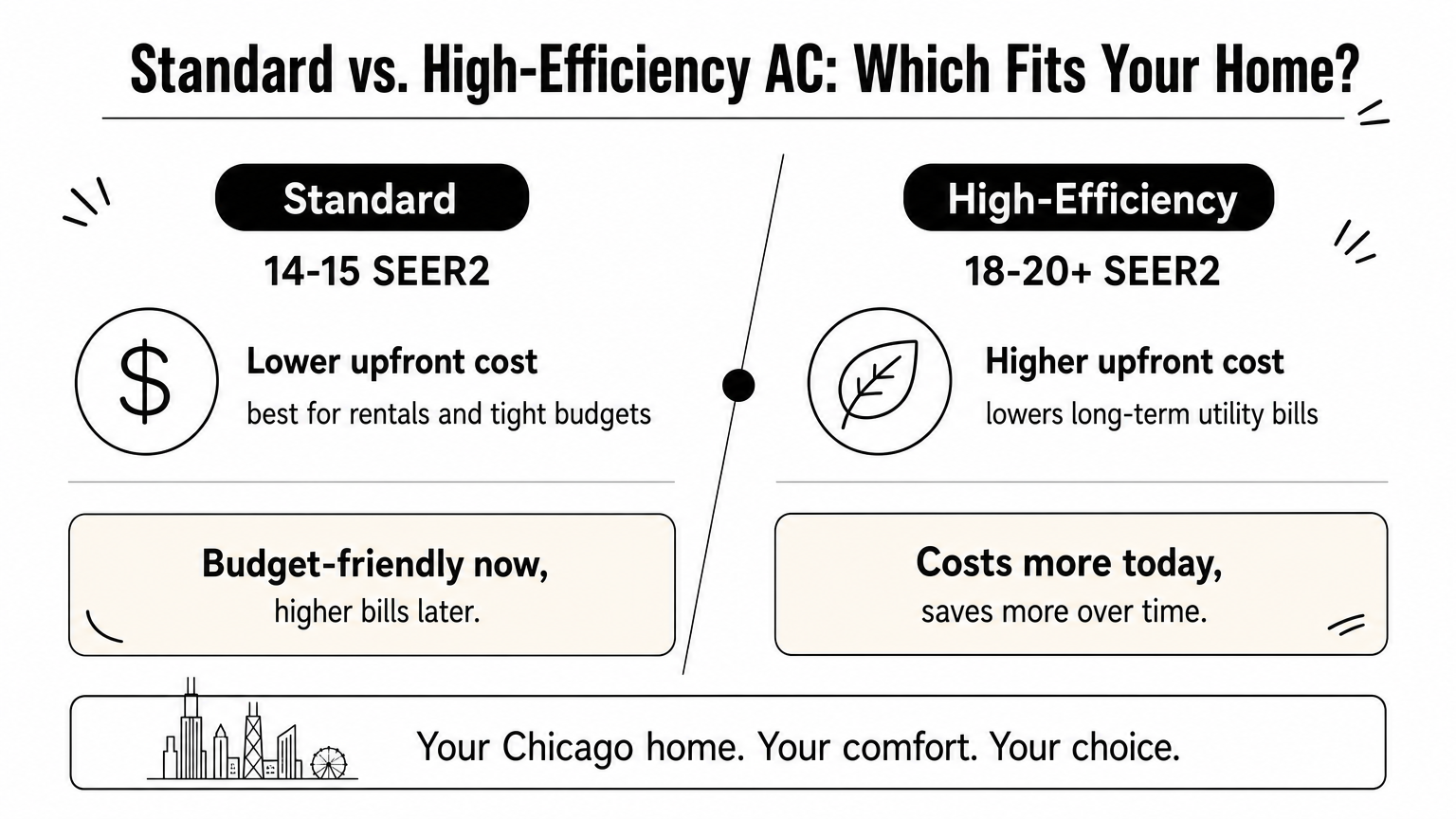
| Efficiency tier | SEER2 range | Typical equipment cost | Best fit |
| Standard | 14-15 | $2,500-$4,000 | Rentals, tight budgets |
| Mid-efficiency | 16-17 | $3,500-$5,500 | Most Chicago homes |
| High-efficiency | 18-20+ | $5,500-$8,500 | High usage, long-term owners |
Note: The above given cost range are estimated ones, actual costs may vary.
The equipment sticker price is only half the story; installation quality decides whether that efficiency rating ever pays off.
Ductwork, electrical, and installation complexity
Ductwork condition changes the job more than almost anything else. Undersized, leaky, or improperly sealed ducts, common in Chicago homes built before modern HVAC standards, often need partial replacement before a new condenser can perform the way its SEER rating promises, adding real money to what looked like a straightforward swap. Homes without usable ductwork at all are a different conversation entirely, worth a look at ductless cooling for Chicago homes instead of forcing a traditional system in. Electrical panels matter too, since an older panel that can't handle a larger condenser's draw needs an upgrade before installation day, something we see often on Park Ridge AC replacement projects in particular.
Chicago-specific factors that move the number
Geography plays a bigger role than most homeowners expect. City permit fees, humidity-driven load calculations, and tight urban lot access (think Wrigleyville three-flats versus a Morton Grove ranch) all shift labor time and cost. A new central AC unit cost installed in a cramped city courtyard with limited crane or ladder access runs higher than the same system going into a suburban backyard with easy equipment access. Permit requirements also vary slightly between the city of Chicago and surrounding suburbs, and skipping a required permit can cost you far more later if you ever sell the home or file an insurance claim.
Finally, timing affects your cost for a new AC unit more than people realize. Scheduling installation in April or October, before peak demand hits, often gets you better contractor availability and sometimes better pricing than a July emergency swap when every crew in the north suburbs is booked solid. If your system is already struggling, don't wait for the hottest week of summer to start getting quotes.
Average AC unit cost by home size
Home size is the single biggest lever on the final number, since square footage drives tonnage, and tonnage drives price more than any other single factor. A unit that's too small runs constantly and never cools your home properly; one that's too big cycles on and off so fast it can't pull humidity out of Chicago's summer air. Getting the size right up front is the single best way to control your average cost of new AC unit spending over the system's lifetime.
Buying the wrong tonnage costs you more in comfort and utility bills than any upfront installation savings ever will.
Typical sizing and pricing by square footage
Here's what we typically see across Chicago and the north suburbs, based on standard load calculations and mid-efficiency equipment:
| Home size | Typical tonnage | Installed cost range |
| Under 1,200 sq ft | 1.5-2 tons | $4,500-$7,000 |
| 1,200-1,800 sq ft | 2.5-3 tons | $5,500-$8,500 |
| 1,800-2,500 sq ft | 3.5-4 tons | $6,500-$9,500 |
| 2,500-3,500 sq ft | 4-5 tons | $7,500-$10,500 |
| Over 3,500 sq ft | 5+ tons or dual-zone | $9,000-$13,000+ |
Note: The above tonnage and cost range are ideal ranges, but actual costs and tonnage may vary.
Why square footage alone doesn't set the final number
Notice these ranges overlap. That's because square footage is a starting point, not a formula. Older homes with poor insulation or single-pane windows need more tonnage per square foot than a newer, well-sealed build. Two-story homes and homes with vaulted ceilings, common in parts of Lakeview and Evanston, also shift load calculations upward even when the floor plan looks similar on paper.
Properly calculating your new central AC unit cost requires a Manual J load calculation, not a rough square-footage guess. Any contractor quoting your job without running one is guessing, and guesses lead to oversized or undersized systems that cost you money for the next fifteen years. Ask for the calculation in writing before you compare quotes.
How to get an accurate cost estimate
Getting a number you can trust starts with skipping the phone quote. Any contractor who gives you a firm price for a new AC unit cost with installation without seeing your home, your ductwork, and your electrical panel is either padding the estimate or setting you up for change orders once the crew arrives. A real estimate takes a technician walking your attic, checking your breaker box, and measuring your existing ducts before anyone writes down a dollar figure.
What a proper in-home visit should cover
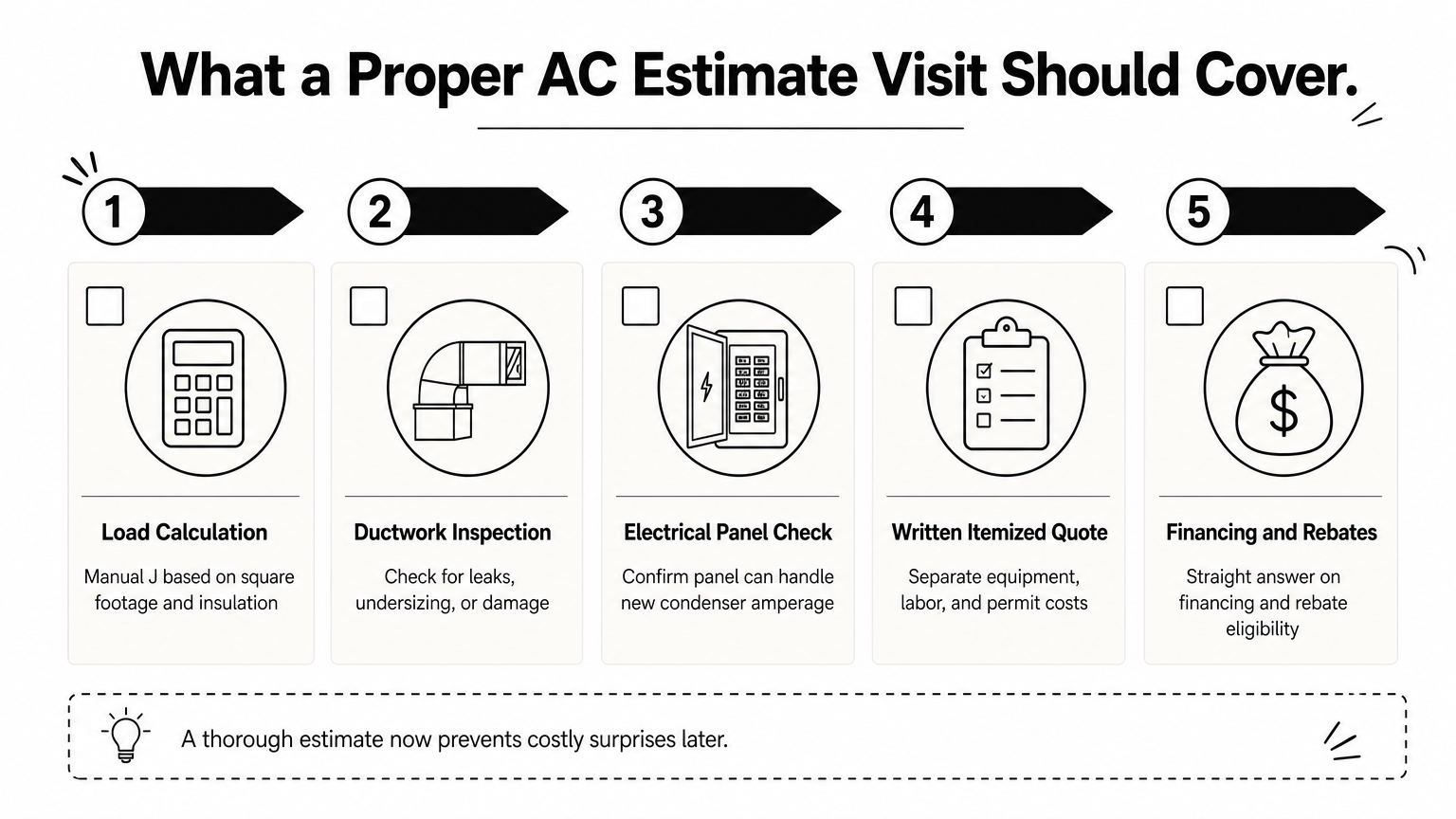
- Manual J load calculation based on square footage, insulation, windows, and ceiling height
- Ductwork inspection for leaks, undersizing, or damage from age
- Electrical panel check to confirm it can handle the new condenser's amperage
- Written itemized quote separating equipment, labor, permits, and any ductwork or electrical work
- Straight answer on flexible financing for your new HVAC system or rebate eligibility, including any utility or manufacturer programs you qualify for
A quote without a home visit is a guess dressed up as a price.
Comparing quotes without getting burned
Once you have two or three written estimates, line them up side by side. Cheapest isn't automatically best, and most expensive doesn't guarantee better work. Pay attention to the SEER2 rating quoted, the brand and warranty terms, and whether the contractor included permit fees or left them as a surprise add-on later.
A contractor who explains why your cost of new central AC unit differs from your neighbor's, because of tonnage, ductwork, or panel age, is being straight with you. One who just repeats a number without explaining the math usually isn't worth hiring.
Requesting multiple estimates also protects you from underbidding, where a contractor lowballs the quote and then finds "necessary" upgrades once the job starts. At Modern HVAC Tech, every estimate includes the load calculation and a written breakdown before we touch your system. You can book a free in-home estimate through our online scheduling system and get a real number, not a guess, within days.
Repair or replace: when a new unit makes sense
Deciding whether to fix your current system or pull the trigger on a new AC unit cost comes down to a simple math problem: how much more life does the old unit have, and how much will keeping it alive cost you compared to starting fresh. The rule of thumb that holds up well across the systems we service in Chicago and the north suburbs makes that math concrete.
The $5,000 rule and system age
The site-wide gut-check we recommend for this decision is the $5,000 rule: multiply your AC's age by the repair estimate, and if that number clears $5,000, the math favors budgeting for a replacement over sinking more into AC replacement in Chicago, IL territory. Picture a 14-year-old system: even a mid-range $900 repair pushes that calculation to $12,600 replacement, well past the threshold, whereas the identical repair on a unit that's only 4 years old barely clears $3,600 and stays a repair, not a replacement, decision.
If a single repair bill approaches half the price of a new system, stop repairing and start budgeting for replacement.
Signs replacement beats another repair
Beyond the $5,000 rule, watch for these patterns:
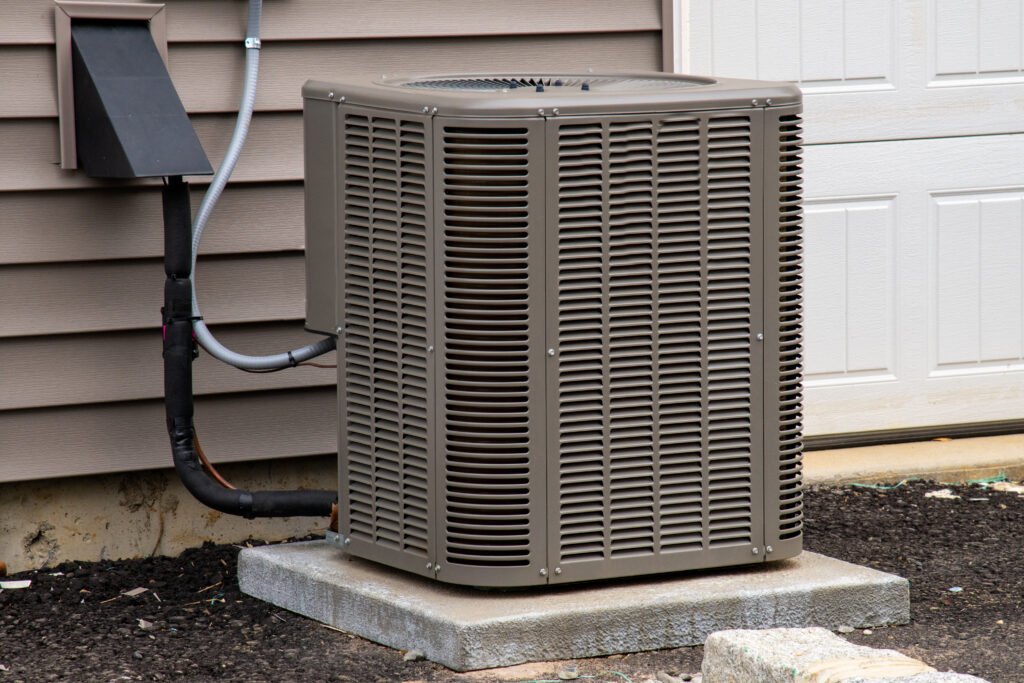
- Refrigerant is R-22, an outdated refrigerant that's expensive and increasingly hard to source
- Repairs have happened two or more times in the past 24 months
- Energy bills have climbed noticeably without a change in usage habits
- The system struggles with humidity even when it's cooling the air fine
- Technician has flagged the compressor itself, not a peripheral part, as the next likely failure
If you're facing an urgent breakdown and need a straight answer fast, our team for 24/7 emergency AC repair in Chicago can give you that repair-or-replace verdict on the spot, not after three callback visits.
Refrigerant type matters more than most homeowners realize. If your unit still runs on R-22, sourcing that refrigerant can cost more than the labor itself, similarly a compressor failure is usually the tipping point, since it's the most expensive single part on the unit, so it helps to know what an AC repair involves and what it costs before that alone tips the decision toward replacement.
What to remember before you buy
Budget $4,500 to $9,500 for most Chicago homes, but let your home's actual load calculation, not a generic square-footage chart, set the real number. The cost of a new AC unit shifts based on ductwork condition, electrical capacity, and the SEER2 tier you choose, so treat every quote that skips an in-home inspection visit with suspicion. Insist on a written, itemized estimate before you sign anything, and don't let a contractor rush you past the Manual J calculation just to close the sale faster.
Timing matters too. Shop in spring or fall when crews have room on the schedule, not during a July heat wave when you're stuck taking whatever's available. If your current system is already failing the 50% rule, don't wait for the breakdown to force your hand.
When you're ready for a real number instead of a guess, book a free in-home estimate for expert AC installation in Chicago and get a straight answer from a technician who's actually measured your house, not a call-center script reading you a range off a screen.
You can also find the summarized version in or Pinterest Pins.
Read other blogs in our Blogger , Reddit and Medium Page as well.
Skip anyone who won't put a real number in front of you until after a technician has actually walked your house and measured what's there, rather than eyeballing a range off your square footage over the phone.
Based on standard load calculations, a home in that size range typically needs 3.5 to 4 tons of cooling capacity, which puts the installed cost around $6,500 to $9,500(roughly) before factoring in any ductwork or electrical work the house might need on top of the equipment itself.
Sometimes, but it depends on your current system's age and refrigerant type. Pairing a new outdoor condenser with an old indoor coil can create a mismatch that hurts efficiency and may void the manufacturer's warranty, so ask your technician directly whether a condenser-only swap makes sense for your specific setup before assuming it'll save you money.