
Your furnace can make plenty of heat. However, without a working furnace fan motor, that heat stays trapped inside the cabinet. The blower motor pushes warm air through your ducts and into every room. So when it starts to fail, you usually get a warning first: a new noise, weaker airflow, or a furnace that keeps shutting itself off.
Is Your Furnace Fan Motor Failing? Warning Signs and What to Do Next
Below, we cover the signs we look for on service calls around Chicago and the north suburbs. We also list simple checks you can safely do yourself. Finally, we explain when it’s time to have a technician take a look. After all, a blower problem is much easier to handle in November than during a January cold snap.
Quick answer: A failing furnace fan motor usually shows up as humming or grinding noises, weak airflow, a burning smell, or a furnace that shuts off quickly. First, check the filter, set the thermostat fan to AUTO, and make sure the furnace switch is on. If the symptoms continue, turn the system off and call a technician, because a struggling motor can damage other parts.
Modern HVAC Technology has worked on heating and cooling systems in Chicago and the north suburbs for more than twenty years, and the advice below comes from that experience.
What the Furnace Fan Motor Actually Does
Inside your furnace, the burners heat a metal heat exchanger. Then the blower motor spins a squirrel-cage wheel that pulls air from your return vents. Next, it pushes that air across the hot metal and out through the supply ducts. In other words, if the blower stops, the heat has nowhere to go.
Most homes in our area have one of two motor types. Older furnaces typically use a PSC motor, which runs at fixed speeds and needs a capacitor to start. In contrast, many newer high-efficiency furnaces use an ECM, or variable-speed motor. This type has its own electronic module, so it ramps up and down gradually.
In summer, the same blower also moves air across your AC coil. For that reason, a weak blower in winter often means your central air will struggle next July too.
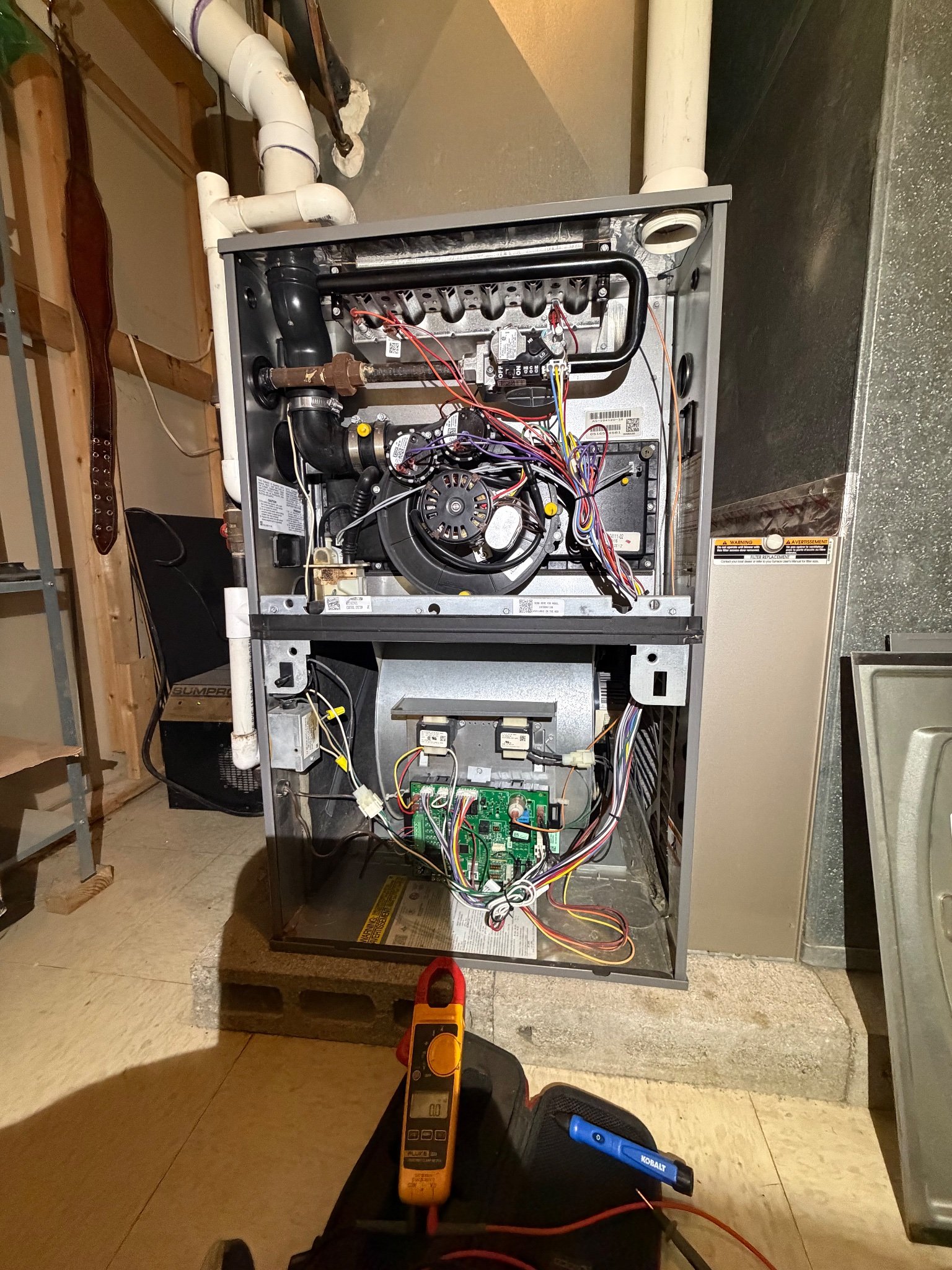
Signs Your Blower Motor Is Going Bad
A furnace fan motor rarely fails silently. Instead, it usually gives you clues. Here are the symptoms homeowners mention most often, roughly in the order they notice them.
New noises: humming, grinding or squealing
A steady hum with no air moving often means the motor has power but can’t start. In that case, a weak capacitor or a seized bearing is usually the cause. Grinding or scraping, on the other hand, points to worn bearings. Meanwhile, a rattle can mean the blower wheel is loose or has debris inside it.
Weak airflow or no air at all
Sometimes you hear the burners light but feel only a faint breeze at the registers. In that case, the motor may be slowing down under load. If the furnace fan isn’t blowing air at all, we often trace it to the motor, the capacitor or the control board. Upstairs bedrooms and rooms at the far end of a bungalow usually notice it first.
A hot or burning smell
A light, dusty smell on the first cold day of the season is normal. However, a sharp electrical or hot-plastic smell that keeps coming back is not. It can mean the motor windings are overheating. So if you notice that smell, turn the furnace off at the thermostat and the furnace switch, then call for service.
Short cycling and frequent shutoffs
When the blower can’t move enough air, heat builds up inside the furnace. As a result, a safety switch called the high limit switch shuts the burners off. The furnace then cools down, restarts and trips again. Homeowners often mistake this loop for a thermostat problem. Even so, it’s hard on the heat exchanger, so it’s worth fixing quickly.
The fan runs nonstop, or never shuts off
When the fan won’t stop, we usually find one of these causes:
- The thermostat fan setting is on ON instead of AUTO.
- A relay on the furnace control board is stuck.
- The thermostat wiring changed during a smart thermostat install.
- On some furnaces, the limit switch keeps the fan running because the cabinet is overheating.
Why Blower Motors Fail in Chicago-Area Homes
Our winters ask a lot of a furnace. During a stretch of single-digit days, the blower can run most of the day. Then, in summer, it runs again for the AC. In short, one motor works almost all year.
These are the causes we see most often:
- Clogged filters, because they make the motor work harder and run hotter.
- Dust and pet hair on the blower wheel, which throw it off balance and strain the bearings.
- Renovation dust from basement or kitchen projects, since the return air pulls it straight into the furnace.
- Undersized or closed-off ductwork, which is common in older two-flats and bungalows with added rooms.
- Failing capacitors on PSC motors, so the motor overheats as it struggles to start.
- Age, because bearings and windings simply wear out after many seasons.
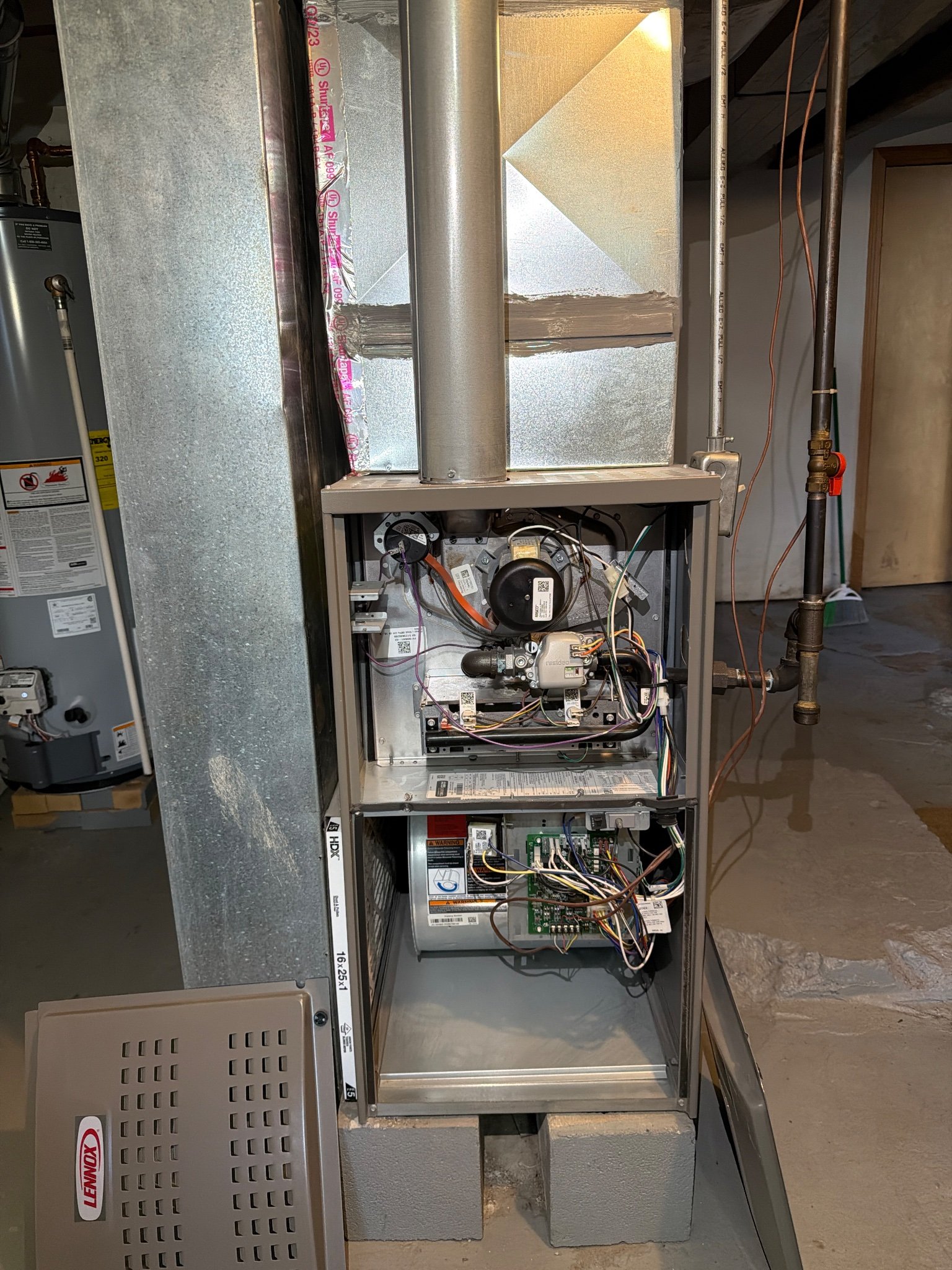
Safe Checks You Can Do Before Calling
Some no-air calls turn out to be simple fixes. Before you schedule service, try these checks. They’re safe for most homeowners, and they don’t require tools or opening anything beyond the filter slot.
- Check the thermostat. Make sure it’s set to HEAT, the setpoint is above room temperature, and the fan is on AUTO. Also, replace the batteries if the screen is dim or blank.
- Look at the filter. If it’s gray and clogged, swap it out. After all, a blocked filter is one of the most common reasons for weak airflow.
- Confirm the furnace switch is on. It looks like a light switch on or near the furnace, and people bump it off more often than you’d think.
- Check the breaker. If the furnace breaker has tripped, you can reset it once. However, if it trips again, leave it off and call us.
- Clear the vents. Open the supply registers, and make sure furniture, rugs or holiday decorations aren’t blocking the returns.
- Note what you see and hear. For example, a blinking status light on the control board, the sound the motor makes and when the problem started all help a technician diagnose it faster.
Please don’t remove the blower door to spin the wheel by hand, and don’t touch the capacitor. A capacitor can hold a charge even after the power is off. Besides, the motor compartment has live wiring, so leave that part to a technician.
Safety first: if you smell gas or your carbon monoxide alarm goes off, leave the house right away. Then call the gas company or 911 from outside, and don’t go back in until they say it’s safe.
Repair or Replace: What a Technician Checks
Not every blower problem means a new motor. First, we test the capacitor and measure the motor’s amp draw against its rating. Next, we check the bearings for play and noise. We also inspect the blower wheel, the control board signal, and the airflow through the filter and ducts.
Here’s what usually decides the outcome:
- A weak capacitor is often the only problem on a PSC motor, so it’s usually a fairly quick fix.
- We can clean a dirty or out-of-balance wheel, which takes strain off the motor.
- Seized bearings or burnt windings, on the other hand, usually mean the motor needs replacing.
- On ECM motors, sometimes only the electronic module has failed instead of the whole motor.
- Finally, an older furnace with a failing motor and other worn parts may call for a replacement conversation, not just a repair.
If your furnace fan motor needs replacing, our guide to furnace blower motor replacementThis session isn’t running, so its files can’t be opened. Send a message to start it again. explains the process and what affects the cost.
When to Call a Technician
Call us if the safe checks above don’t fix the problem. Likewise, call right away if you notice a burning smell, a loud grinding noise, a breaker that keeps tripping, or a furnace that keeps short cycling. Turning the system off and calling early often keeps a blower problem from becoming a cracked heat exchanger or a dead control board.
Our Lincolnwood location on West Touhy Avenue serves Lincolnwood and nearby north suburbs, including Skokie, Niles, Morton Grove, Glenview, Wilmette, Evanston, Park Ridge and Des Plaines. Meanwhile, our Chicago location on North Sheridan Road covers the North Side, including Edgewater, Uptown, Andersonville, Rogers Park, Lakeview, Lincoln Square and Logan Square.
Keeping Your Blower Motor Healthy
Most of what shortens a blower motor’s life comes down to airflow and dirt. Fortunately, a few simple habits go a long way:
- Change the filter on schedule, and more often during heavy use, construction or if you have pets.
- Keep supply and return vents open and clear.
- Schedule a yearly furnace tune-up, so we can check the wheel, capacitor and motor draw before winter.
- Pay attention to new sounds and smells instead of turning up the TV.
During a tune-up, we can catch a weak capacitor or a dirty wheel before either one takes down the motor. In the end, it’s a small visit compared with a no-heat call on the coldest night of the year.
Not sure what’s wrong, or prefer not to open the furnace yourself? Our licensed technicians can diagnose the problem and get your heat running again. Book a furnace repair with Modern HVAC TechnologyThis session isn’t running, so its files can’t be opened. Send a message to start it again. at a time that fits your schedule.Book a thermostat installation with Modern HVAC Tech and get a schedule that fits your home and your bill.
You can also find the summarized version in or Pinterest Pins. Read other blogs in our Blogger , Reddit and Medium Page as well.
The most common signs are humming or grinding noises, weak or no airflow, a burning smell, and a furnace that shuts off soon after starting. If a clean filter and correct thermostat settings don’t help, a technician should test the motor and capacitor.
It’s best not to. A noisy motor often has worn bearings or a failing capacitor, so running it can overheat the motor or the furnace. Instead, turn the system off and schedule service.
Often it’s the capacitor, especially when the motor hums but doesn’t start. However, the only way to know for sure is to test both, so leave this to a technician because capacitors can hold a dangerous charge.
First, check that the thermostat fan is set to AUTO rather than ON. If it is, the cause may be a stuck relay on the control board, a wiring issue, or an overheating furnace that keeps the fan running for safety.
Yes. The same blower moves air across your AC coil in summer. As a result, a weak furnace fan motor in winter usually means weaker cooling next summer too.