
When your commercial AC quits, the clock starts. Tenants get hot, equipment overheats, and customers walk out. Searching commercial air conditioner repair near me gives you dozens of options, and most of them sound identical on the phone.
5 Things to Ask Looking for a Commercial Air Conditioner Repair near Me
Ask Better Questions Before You Book
We're assuming the basics are already on your checklist, such as round-the-clock coverage, EPA-certified technicians, written estimates, and a real warranty, and those are covered elsewhere:
: our page on same-night AC repair in Chicago, our guide to what to look for in an emergency AC repair company, and EPA's Section 608 page for the certification rules.
This guide covers the five questions most business owners never think to ask: how will you keep us running while the unit is down, who handles the building side, what will I get in writing afterward, do you know my equipment, and will you tell me when to stop repairing.
What This Guide Covers
What a strong answer sounds like, and what should make you hang up. We've been repairing and maintaining cooling systems for Chicago businesses for over twenty years, so these come from real service calls in places like Evanston air conditioning repair, Des Plaines, and Lakeview.
In short, use them to choose with confidence, even if you don't choose us.
Below, you'll find each question,
| Question to ask | What a good answer includes | Biggest red flag |
| Downtime plan? | Asks what can't go down, offers spot cooling, restores critical areas first | Pulls panels with no questions and no fallback |
| Handles building logistics? | Confirms roof access, tenant notice, and lift or approval needs | Never asks about access and leaves you to chase the landlord |
| Service report after the visit? | Cause, parts replaced, readings, and photos( if req) | One-line invoice that just says "AC repair" |
| Services your systems and brands? | Asks your make, model, and age before quoting; names your system type | "We work on everything" with no specifics |
| Honest about repair vs. replace? | Gives age, repair history, parts outlook, and a budget timeline | "It should be fine" with nothing behind it |
1. How will you keep my business running while the unit is down?
Why this matters
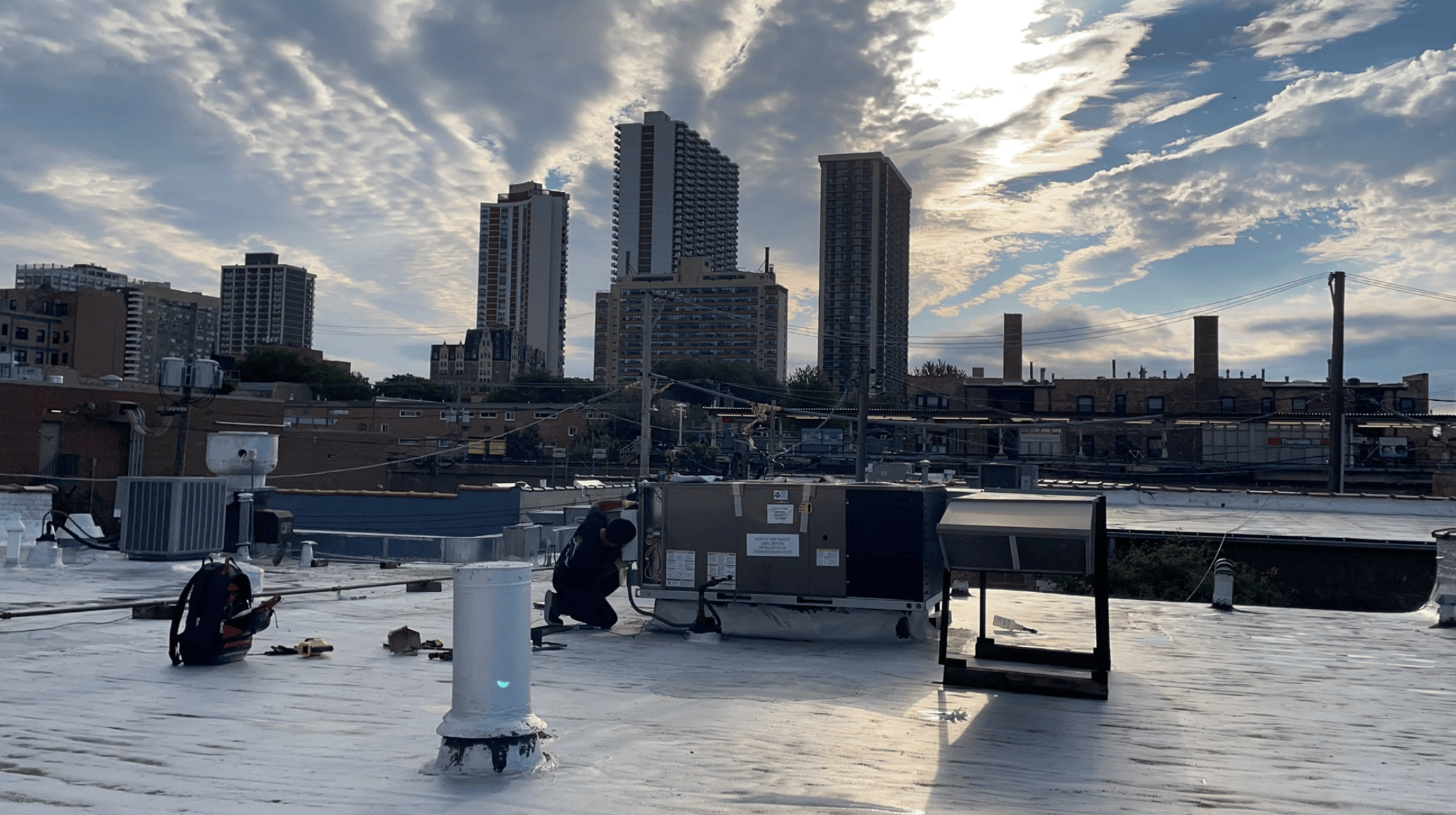
A broken AC is rarely just an uncomfortable afternoon. Spoiled stock in your commercial cooler and freezer units, a server closet drifting past safe temperatures, and a lobby full of customers all carry different price tags, and not every one of them needs the same fix first.
That is why the repair itself is only half the job. A contractor with a plan will ask what can't go down, bring portable cooling if the fix will take hours or days, and restore the critical space first, even if the full repair comes later. One who just says "we'll get to it" leaves that decision to chance.
What a good answer sounds like
A strong contractor starts with questions about your space, not a price. They want to know which areas are critical, what is stored there, and how long you can tolerate the heat. Then they walk you through the options.
Follow up with these:
-
Can you set up temporary or spot cooling while parts are on order?
-
Can you restore cooling to the critical area first and finish the full repair later?
-
Will you tell me upfront if the fix will take more than one visit?
Red flags to watch for
Be cautious if the contractor treats every call the same. A technician who starts pulling panels before asking or who has no answer for a server room or walk-in cooler, hasn't dealt with a business shutdown before.
Another warning sign is a repair plan with no fallback. If the part is on backorder and the only advice is to wait, you have a diagnosis but no plan. The best contractors share the bad news early, along with what they can do about it in the meantime.
2. Who handles the roof, the landlord, and the building rules?
Why this matters
Commercial repairs rarely happen in an empty room. Rooftop air conditioning units sit behind locked hatches, tenant spaces need advance notice, and a lift or crane may need the property manager's approval. Whether your building sits in Lakeview or needs Park Ridge AC service, the logistics can slow a repair as much as the part itself.
A certified commercial technician fixes the cause of the failure, not just the symptom.
What a good answer sounds like
Look for a contractor who asks about access before the truck leaves the shop. Someone who has worked in occupied buildings knows to confirm:
-
Who holds the roof key or lockbox code, and how to reach them after hours
-
Whether tenants or neighbors need notice before noisy or disruptive work
-
How they handle any sign-off your property manager or landlord requires
Red flags to watch for
First, watch for a dispatcher who never asks about the building. If nobody mentions access, tenants, or roof keys, expect delays on arrival while someone hunts for the hatch.
Likewise, be careful with a contractor who leaves you to chase the landlord or property manager alone. Good ones help coordinate, even when the approval is yours to give.
3. What will your service report tell me afterward?
Why this matters
Unfortunately, most owners only hear "it's fixed" when the technician leaves. That tells you nothing about what failed, what was replaced, or whether the same fault is likely to come back next month.
A proper service report turns one repair into a record. Over a few years, those records show which units cost the most to keep running, which problems repeat, and when your budget should plan for something bigger.
A big repair with no paperwork is a repair you can't learn from.
What a good answer sounds like
Ask what documentation comes with a visit, and whether you get it automatically or only when you ask. A thorough report covers:
-
What failed, what caused it, and which parts were replaced
-
Photos of the problem area, especially for anything on the roof
-
Any other issues spotted that could fail next
Red flags to watch for
No cause, no readings, and no photos means nobody can check the work or spot a pattern later.
Be wary, too, of a contractor who gets defensive when you ask for details. Technicians who did careful work are usually glad to show it, and a short report.
4. Which commercial systems and brands do you service?
Why this matters
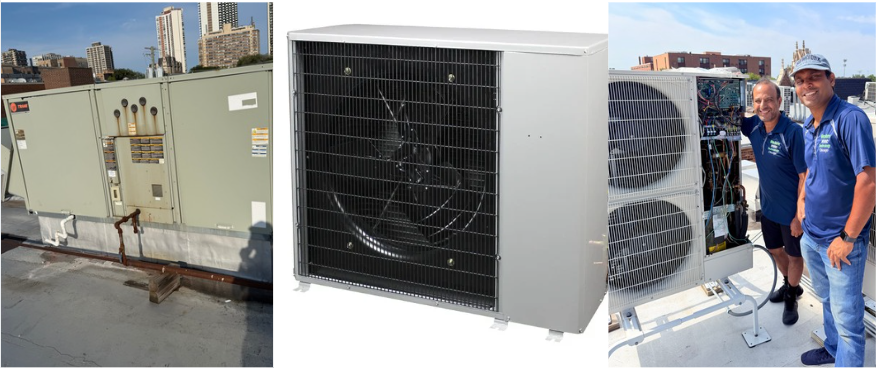
Your equipment decides who can fix it. Rooftop units, split systems, chillers, and VRF setups fail in different ways and need different tools and parts. Brands add another layer, since Carrier, Trane, Lennox, and Daikin each use their own controls. A contractor who has never touched your model will learn on your dime. A search for commercial air conditioner repair near me won't reveal that.
A contractor who knows your exact equipment diagnoses faster and guesses less.
What a good answer sounds like
For example, expect questions before you get a quote. A good dispatcher asks for your make, model, and age and names the systems they service every week. Confirm these points:
- They work on your system type, whether rooftop, split, chiller, or VRF
-
They can source parts for your brand quickly
-
They handle your controls, including programmable and building automation thermostats
Red flags to watch for
Beware of the line "we work on everything" with no examples behind it. Zero brand experience and no questions about your unit mean the technician is guessing.
5. Will you tell me when to stop repairing and start planning?
Why this matters
Every commercial unit eventually reaches the point where another repair is money badly spent. A contractor who earns from each repair has little reason to say so, which is why you want to ask the question before you're in the middle of a breakdown.
The honest answer depends on age, repair history, parts availability, and how well the unit has been kept up. Units that get scheduled AC maintenance in Chicago tend to fail less often, so favor a contractor who can show a maintenance record next to the repair history. When you compare options for commercial air conditioner repair near me, pick the one who will give you a straight read on the whole system, not just today's fault.
What a good answer sounds like
A good contractor gives you a clear view of what's ahead, even when it isn't what you hoped to hear. Ask them to explain:
-
The unit's age and how that compares with typical service life
-
How many repairs it has had and what they've added up to
-
Whether parts and refrigerant for your model are still easy to get
-
A rough sense of when replacement would need to enter your budget
-
Whether a phased plan makes sense, such as replacing one unit at a time
Red flags to watch for
Finally, be cautious of a contractor who says nothing about the future of your unit. "It should be fine" with no age, history, or parts information behind it isn't planning, it's hoping.
Also watch for the opposite problem: a contractor who only ever recommends the smallest possible repair. That keeps today's bill low, but you end up paying for the same failure each summer.
Choosing the right repair partner
Finding good "commercial air conditioner repair near me" comes down to more than a fast response. A contractor who has a downtime plan, handles the building logistics, documents every visit, knows your equipment, and is honest about when to replace has earned your trust before the first repair.
Therefore, call two or three companies before you need one. Also, save the best number where your whole team can find it. Clear, direct answers beat the lowest quote almost every time, because a contractor who hesitates now will hesitate during a heat wave.
Modern HVAC Tech is a locally owned Chicago company with over twenty years of experience and a habit of answering these questions plainly. If you want to hear how we answer them, book commercial cooling repair and maintenance with Modern HVAC Tech and put us to the test.
You can also find the summarized version in or Pinterest Pins.
Read other blogs in our Blogger , Reddit and Medium Page as well.
Commercial systems run on three-phase power and include equipment residential technicians rarely touch, like rooftop package units, chillers, and VRF setups with building-automation controls. They also sit in occupied buildings, where access, tenants, and downtime shape how a repair gets done.
It depends on your lease. Some leases make the tenant responsible for HVAC upkeep and repairs, others leave major equipment with the landlord, and many split it. Read the maintenance and repairs clause, and if it's unclear, ask your property manager who approves and pays before work starts. Telling your contractor up front saves time on approvals.
Common causes include dirty coils or filters restricting airflow, low refrigerant from a leak, a failed capacitor or fan motor, or a compressor problem. Some are quick fixes and others aren't, so avoid letting the unit struggle for hours, since that can turn a small fault into a bigger one. A technician can measure temperatures and pressures to find the actual cause.