
We'll walk through how to tell a trustworthy HVAC company from one that will overcharge you, what a fair repair should cost in the Chicago area, and what should actually happen once a technician is standing in front of your unit, and how same-day service and transparent pricing separate the contractors worth calling from the ones to skip.
However, we'll also cover the red flags that separate a trustworthy local shop from a crew that overcharges scared homeowners during a cold snap
Why hiring a local AC repair company matters
Searching air conditioner repair near me isn't just about convenience, it's about matching urgency with proximity. A local company doing AC repair in Lincolnwood can reach your bungalow or a Wrigleyville two-flat quickly, while a national chain routes your call through a call center in another state before anyone even checks technician availability.
Choosing a locally owned contractor also means you're dealing with people who answer to their neighbors, not shareholders, which keeps pricing and workmanship honest in ways corporate franchises often can't match.
Response time matters when your system is down
A broken AC is never convenient, and once temperatures climb into the summer stretch, it stops being just uncomfortable and starts mattering for kids, elderly residents, and anyone with a health condition.
In fact, local companies staffed with technicians who live in the same neighborhoods they serve can typically dispatch same-day emergency AC repair, sometimes within a couple hours, because they're not juggling calls across five states.
National chains and big-box installers often book appointments days out during peak season, leaving you to wait it out or pay overtime rates for service a local shop would have offered anyway.
Local techs understand Chicago's housing stock
Older Chicago bungalows, converted two-flats, and vintage high-rise condos each present different challenges for cooling systems, and a technician who's worked exclusively in this market knows the quirks before he even opens the access panel.
For example, rowhouses with tight mechanical closets, buildings retrofitted with ductless mini-split systems, and vintage boilers paired with newer central air trip up out-of-town crews who mostly install new construction in the suburbs.
Familiarity with the City of Chicago's building and permitting requirements also means fewer surprises and delays when a repair turns into something that needs inspection or sign-off.
Accountability you can actually verify
Reviews for a local company reflect real neighbors, not a diluted national average pulled from hundreds of markets. Ask around Skokie, Morton Grove or about AC repair in Park Ridge, IL.
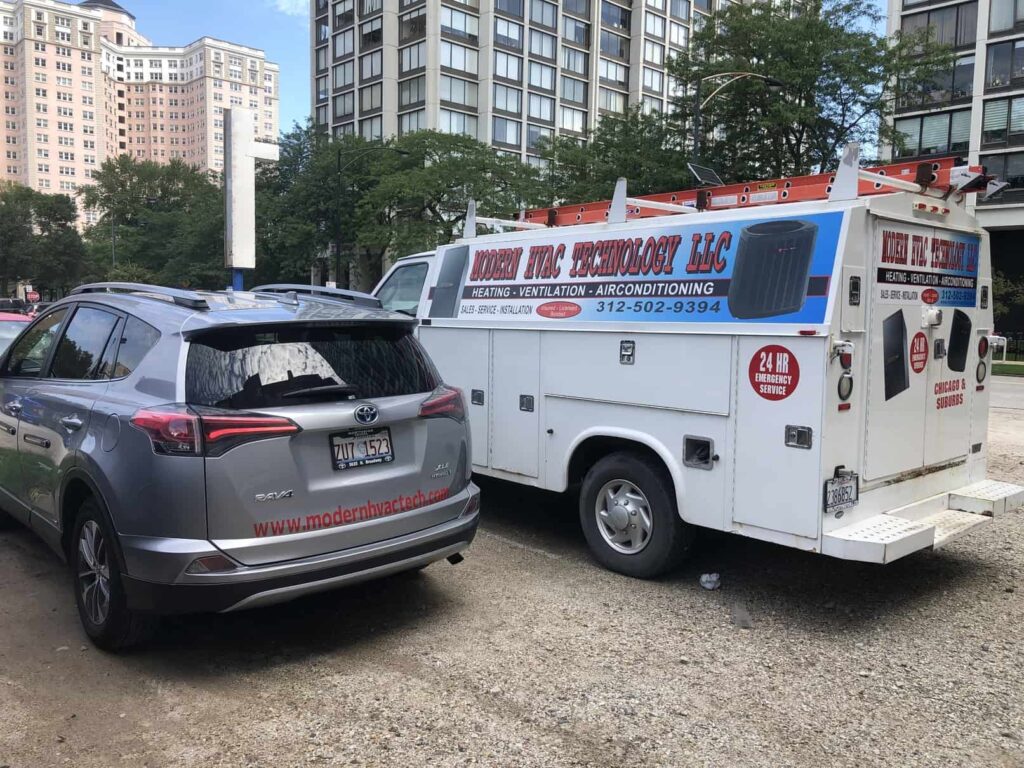
You'll get a straight answer about whether a company like Modern HVAC Tech actually shows up on time and charges what it quoted on the phone.
That kind of direct accountability disappears when you're dealing with a franchise, where the technician working on your unit today might be gone from the company, or the city, within a year.
Local vs. national: a quick comparison
| Factor | Local independent contractor | National chain / big box |
| Response time | Often same-day, especially in-season | Frequently booked days out |
| Pricing transparency | Upfront quotes, flat rates common | Bundled fees, upsell pressure |
| Familiarity with local homes | High, works the same housing stock daily | Low, crews rotate regions |
| Review accountability | Tied to name and neighborhood reputation | Diluted across many markets |
| Technician consistency | Same faces, long tenure | High turnover, rotating staff |
That combination, faster arrival, fewer coding surprises, and reviews you can actually cross-check with a neighbor, is why searching for a hvac air conditioner repair near me should point you toward a locally owned shop first, not a national brand with a bigger ad budget.
How to choose a AC repair company near you
Finding a name through air conditioner repair near me is easy. Finding one that won't upsell you on a $12,000 system when a $200 capacitor would fix the problem takes a little more work.
The good news is that a handful of questions, asked before you ever schedule a visit, weed out the shops that pad invoices from the ones that fix your AC and move on.
Ask these questions before you book
Call two or three companies and listen for how they answer, not just what they say. A technician who won't give you a ballpark number over the phone, or who insists on a diagnostic fee before discussing anything, is usually padding the bill somewhere else.
- Do you charge a flat diagnostic fee, and is it waived if I approve the repair?
- Can someone reach my house today, and what's the arrival window?
- Are your technicians licensed and insured in Illinois?
- Will I get a written quote before any major repair, replacement or installation work starts?
Watch for pricing red flags
A trustworthy contractor gives you a written estimate before starting work, not a number that mysteriously grows once the panel is off.
However, be wary of any company that quotes a repair price only after they've already opened up your unit, since that's a common tactic to justify a bigger bill once you feel stuck mid-repair.
Compare that against a company like Modern HVAC Tech, which builds its reputation around transparent, upfront pricing quoted before any tools come out of the truck.
| Red flag | What it usually means |
| No price until the job is half done | Bait-and-switch pricing |
| Generic five-star reviews only, no detail | Possibly purchased or incentivized |
| No clear answer on licensing | May not carry required credentials |
| Pushes replacement before diagnosis | Commission-driven upselling |
Run any hvac air conditioner repair near me search through this checklist before you commit, and you'll cut your odds of getting burned by a bad contractor down to almost nothing.
Common air conditioner problems and what causes them
Most AC service calls for air conditioner repair near me end with one of a handful of predictable culprits. Chicago's mix of humid summers and older housing stock means the same failures show up again and again.
| Problem | Common cause | Typical symptom |
| Warm air from vents | Refrigerant leak | Weak or warm airflow |
| Unit won't start | Bad capacitor or contactor | Humming, no start |
| Frozen coil | Dirty filter, low airflow | Ice on lines, weak cooling |
| Water leaking indoors | Clogged condensate drain | Puddles near unit |
| Short cycling | Oversized unit, thermostat issue | Frequent on/off |
| Loud banging or squealing | Worn fan motor or bearings | Noise on startup |
Refrigerant leaks and low charge
Warm air blowing from your vents even though the unit is running usually points to a refrigerant leak, often at a corroded coil or a loose fitting from a previous repair.
Refrigerant doesn't get "used up" the way oil does in a car, so if your system is low, something is leaking, and topping it off without finding the leak is a temporary fix that costs you again next season.
The EPA regulates refrigerant handling closely, which is another reason to hire a licensed technician rather than someone offering a cheap top-off out of a van
Electrical and capacitor failures
A unit that hums or buzzes but won't start, or one that shuts off randomly, often has a failing capacitor or contactor.
As a result, these parts wear out from years of heat cycling and are cheap to replace, usually well under $300 in parts and labor. Electrical issues can also stem from a tripped breaker or a failing fan motor, both of which mimic bigger problems if you're not looking closely.
A dead capacitor is one of the most common reasons an AC "dies" and one of the cheapest fixes on this list.
Electrical issues can also stem from a tripped breaker or a failing fan motor, both of which mimic bigger problems if you're not looking closely.
Airflow and drainage problems
Dirty filters, blocked condensate drains, and iced-over coils account for a large share of calls for hvac air conditioner repair near me during peak summer.
Restricted airflow forces the system to run longer and colder than it should, freezing the evaporator coil and eventually shutting the whole unit down.
Aging equipment and deferred maintenance
Systems past 12 to 15 years old fail more often simply because parts wear out together, not one at a time. Neglecting annual AC maintenance in Chicago accelerates this, since a technician who never sees your unit until it breaks can't catch a slipping belt or corroding coil before it fails.
Owners who skip yearly tune-ups often end up paying the real cost of putting off HVAC repairs, when a routine seasonal check would have prevented the breakdown entirely.
AC repair costs and the $5,000 rule explained
Once a technician tells you what's wrong, the next question is whether it's worth fixing at all. The $5,000 rule is a simple industry gut-check:
Multiply the age of your unit by the estimated repair cost, and if that number tops $5,000, replacement usually makes more financial sense than another repair.
A 10-year-old unit with a $600 repair estimate lands at $6,000, tipping toward replacement, while a 5-year-old unit with the same $600 repair sits at $3,000, well worth fixing.
If your unit's age times the repair bill tops $5,000, you're usually better off replacing than repairing again.
Typical repair costs in the Chicago area
| Repair | Typical cost range |
| Capacitor replacement | $150 - $300 |
| Contactor replacement | $150 - $300 |
| Refrigerant leak fix (minor) | $200 - $450 |
| Coil replacement with recharge | $900 - $1,800 |
| Condenser fan motor | $350 - $650 |
| Full compressor replacement | $1,800 - $2,800 |
Note: The above shown costs are estimated ones actual costs may vary.
Running a search for hvac air conditioner repair near me should surface companies willing to quote within these ranges over the phone, not ones that dodge the question until they're standing in your basement.
When repair stops making sense
A compressor failure on a unit already past 12 years old is the classic case where the $5,000 rule earns its name and AC replacement in Chicago starts to look smarter than another repair.
Compressor replacement alone often runs $1,800 to $2,800, and pairing that number with a unit's age frequently pushes the math past the threshold, especially once you factor in that an aging system will likely need another repair within a year or two anyway.
Why upfront pricing protects you either way
A contractor who gives you honest numbers for both the repair and a replacement estimate lets you make this call yourself instead of guessing whether you're being steered toward a sale.
Modern HVAC Tech walks Chicago homeowners through this exact math on every service call, laying out repair and replacement costs side by side so the $5,000 rule isn't a guessing game, it's a number you can see and check yourself before agreeing to anything.
What happens during a professional AC repair visit
When a technician finally pulls into your driveway after you searched air conditioner repair near me, the visit follows a predictable sequence if the company is any good.
A proper visit isn't just swapping a part, it's confirming the fix actually solves the problem before the truck leaves your driveway.
Knowing what should happen at each step helps you spot corners being cut, whether that's skipping a real diagnostic or rushing through the final test to get to the next job.
Before the tech even touches your unit
Expect a few basic steps before any tools come out. A good technician introduces themselves, confirms the issue you described on the phone, and asks a handful of questions:
when the problem started, whether you've noticed strange noises or smells, and what the thermostat is set to versus what it's actually reading.
Therefore. this short conversation often narrows down the likely cause before the panel ever comes off, saving diagnostic time and, in turn, your bill.
The diagnostic phase
Once the questions are answered, the real inspection starts. A thorough diagnostic typically covers:
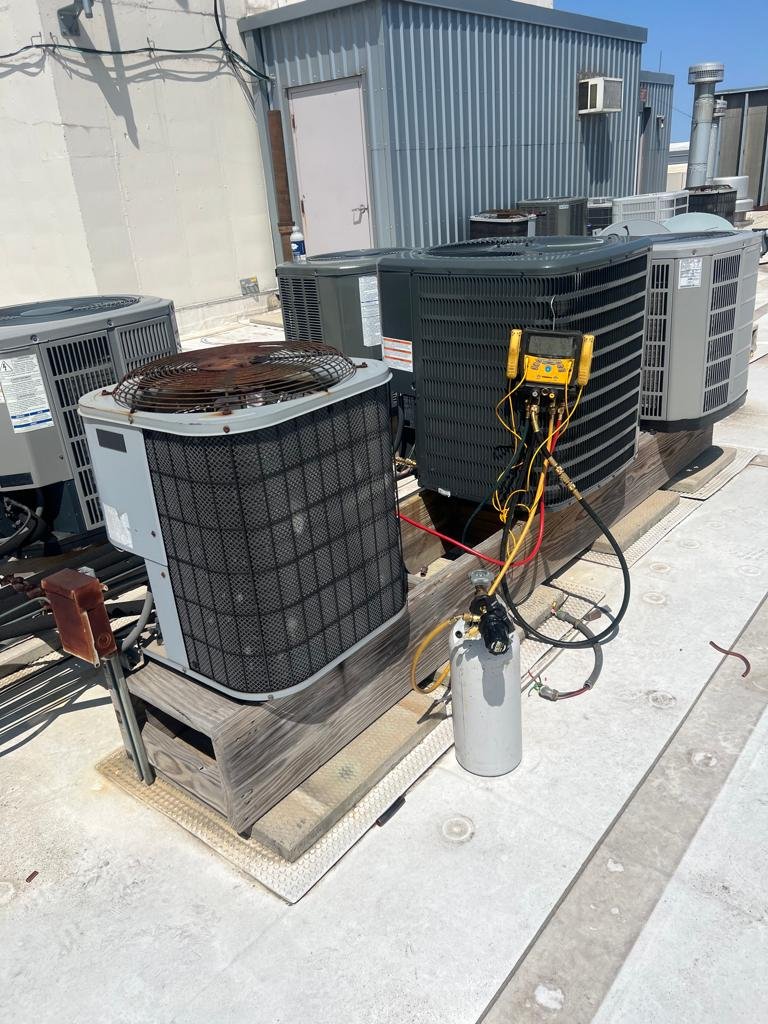
- Checking refrigerant pressure and looking for signs of a leak
- Testing the capacitor, contactor, and other electrical components
- Inspecting the condenser coil and evaporator coil for dirt or ice
- Checking airflow, filter condition, and the condensate drain line
- Testing the thermostat's connection and calibration
This is also the moment where a written estimate should show up, before any major replacement or installation work starts, not after. If a technician wants to start replacing parts before telling you what it'll cost, that's your cue to stop them and ask for numbers first.
The actual repair
Once you approve the estimate, the technician moves into the repair itself, whether that's replacing a capacitor, sealing and recharging a refrigerant leak, or clearing a clogged drain line.
Good technicians work from a stocked truck, meaning common parts are usually available on the spot rather than requiring a second visit days later unless otherwise.
Bigger repairs, like a coil or compressor swap, sometimes need a part ordered in, and a trustworthy company tells you that clearly instead of quoting a same-day fix they can't deliver.
Testing and walkthrough before they leave
A repair isn't finished the moment the new part goes in. The technician should run the system through a full cycle, checking supply air temperature, listening for unusual noise, and confirming the thermostat responds correctly.
Before packing up, they should walk you through what was fixed, what the warranty covers, and any maintenance step, like a reliable air conditioning tune-up, you can take to avoid the same failure again.
Modern HVAC Tech builds every service call around this same sequence, so you know exactly what was done and why before the technician drives away.
Getting your home cool again
A broken AC on a brutal Chicago afternoon doesn't leave much time for research, but now you know what separates a fair repair from a costly mistake.
Look for a locally owned contractor who quotes prices upfront, answers licensing and warranty questions without hesitation, and can actually show up the same day.
Remember the $5,000 rule when a repair estimate feels steep, and never let a technician start work before you've seen a written number.
Good hvac air conditioner repair near me results come down to - Asking the right questions up front, get the number in writing, and pick the crew that treats your home like it's actually in their neighborhood, because for a local company like Modern HVAC Tech, it is.
If your system quits today, you can schedule air conditioner repair in Chicago directly and skip the guesswork.
You can also find the summarized version in or Pinterest Pins.
Read other blogs in our Blogger and Medium Page as well.
Most single repairs run from about $150 for a capacitor swap up to $1,800-$2,800 (expected range, actual costs may vary) for a full compressor replacement. A written estimate before any work starts is the best way to confirm your quote falls in a fair range.
Use the $5,000 rule: multiply your unit's age by the repair estimate. If the result tops $5,000, replacement usually makes more financial sense than another repair, especially on units past 10-12 years old.
Locally owned contractors who staff technicians in the neighborhoods they serve can often offer same-day service, sometimes within a couple hours, since they aren't routing calls through an out-of-state dispatch center.