
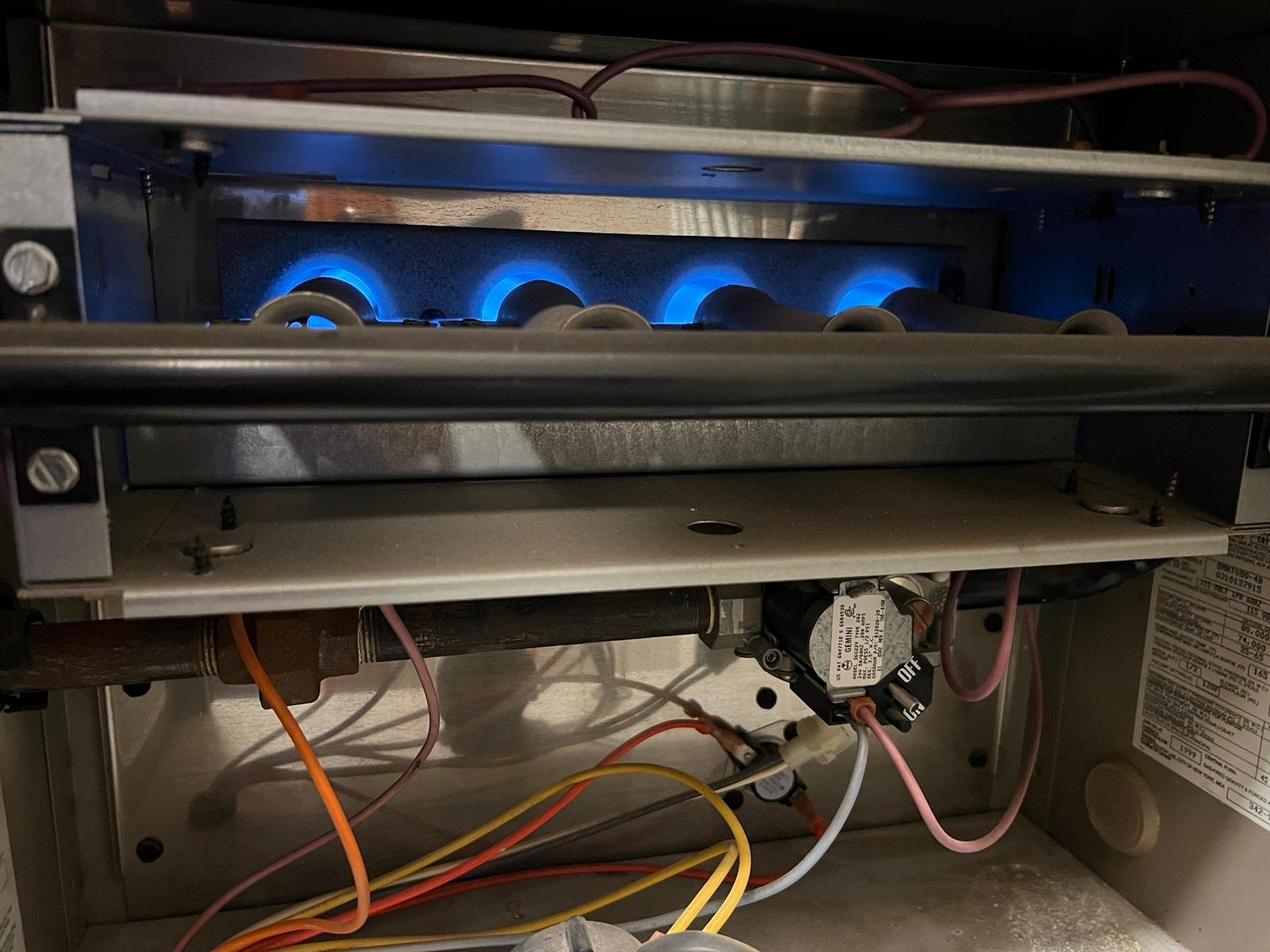
This guide walks through exactly how to vet heater repair companies near me, what questions to ask before you agree to a service call, and roughly what repairs should cost in a market like Chicago, and it pairs well with our list of ways to find a reliable furnace repair pro in Chicago.
We'll also cover the red flags that separate a trustworthy local shop from a crew that overcharges scared homeowners during a cold snap
Beyond high search rankings, you need a local technician who provides transparent pricing, fast response times, and dependable repairs when your heating system stops working..
Here's the direct answer: finding a good heater repair company comes down to checking a handful of specific things before you call, not just picking whoever has the most stars. You want a licensed local technician, upfront pricing before any work starts, and a company that answers the phone when your heat actually goes out, not three days later.
Signs it's time to call a heater repair professional
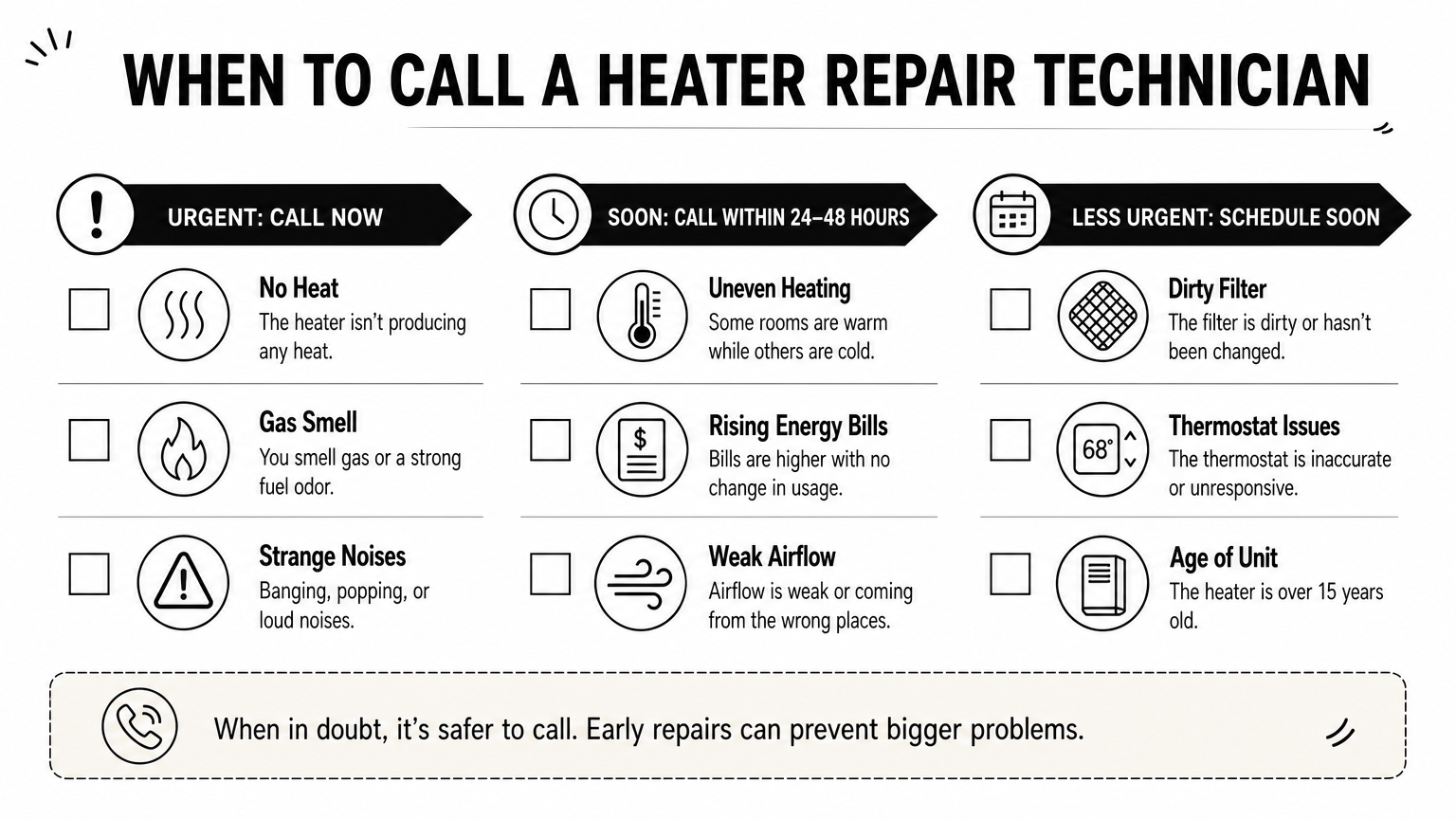
Before you even start searching, it helps to know whether you're dealing with a quick fix or a real emergency. Some heater problems can wait until morning. Others mean you need heater service and repair near me tonight, not next week. Knowing the difference keeps you from either freezing it out unnecessarily or paying emergency rates for something minor.
Obvious red flags
A few signs mean you should stop troubleshooting and call someone right away. If your furnace is blowing cold air, cycling on and off constantly, or making banging and screeching noises, that's your system telling you something's broken internally. A burning smell that doesn't fade within a few minutes of startup, or any smell of gas, means you shut the system off and call immediately. That's not a maintenance issue, that's a safety issue.
If you smell gas or see soot near your furnace, skip the online search entirely and call a technician now.
Subtler signs homeowners ignore
Other problems build up slowly and get written off as normal. A heating bill that's noticeably higher than last winter, rooms that heat unevenly, or a thermostat that seems to be guessing at the temperature all point to a system that's losing efficiency, often from a failing part or dirty components. Yellow instead of blue burner flames, frequent short cycling, or a pilot light that keeps going out are also worth a service call before they turn into a full breakdown, since delaying HVAC repairs almost always costs more later.
Quick checklist
Use this list to decide how urgently you need to call:
- Call today: gas smell, burning odor, no heat at all in freezing temperatures
- Call this week: uneven heating, rising bills, strange noises, short cycling
- Schedule maintenance: system is over 10 years old and hasn't had a furnace maintenance visit in over a year
Once you know which category you're in, you'll know whether to call for 24/7 emergency furnace repair or just book a regular appointment, which changes how you approach the next steps below.
Step 1. Search for licensed and insured local companies
Start narrower than a generic web search. Instead of scrolling through ten unranked listings, search something like "licensed heater repair [your neighborhood]" and check each company against your state's contractor license lookup before you call. In Illinois, a local heating contractor in Chicago doing gas or electrical work typically needs proper licensing and liability insurance, and a legitimate company will give you that information without hesitation.
Why local matters
A company based in Chicago or the north suburbs knows the older housing stock, common furnace brands installed here, and how fast pipes and heat exchangers fail during a real cold snap. Modern HVAC Tech, for example, has handled furnace repairs in Evanston, IL and served Chicago and communities like Park Ridge and Morton Grove since 2012, backed by a team with over 20 years of combined industry experience, which means the crew showing up already knows what's likely wrong before they open the panel. That local familiarity often shortens the diagnostic time and keeps your repair cost down.
Step 2. Check reviews and local reputation
Once you've confirmed a company is licensed, dig into how they actually treat customers. A five-star average means little if it's built on twelve reviews from three years ago. Look for a steady pattern of recent reviews, ideally within the last six months, across Google, Yelp, and the Better Business Bureau. That pattern tells you more than any single glowing testimonial ever will.

Reading between the lines
Skim past the star rating and read what people actually complain about. Recurring mentions of hidden fees, no-shows, or pushy upsells are dealbreakers, even if the overall score looks fine. On the other hand, reviews that mention specific technician names, honest pricing, or same-day fixes usually point to a company worth calling..
A company's reputation in your own neighborhood tells you more than its star rating ever will.
Local reputation checklist
- Search "[company name] reviews" plus your suburb, not just the city
- Check if they respond professionally to reviews
- Ask neighbors or local Facebook groups who they've used
- Confirm the company actually serves your specific area, not just the broader region
A reliable heater repair service near me search should turn up a company with consistent, recent, and specific praise, not just a high number attached to a generic listing.
Step 3. Compare pricing and service call fees
Pricing is where a lot of homeowners get burned during a cold snap. Before you agree to anything, ask for the service call fee upfront and whether it's waived if you approve the repair. Most Chicago-area companies charge somewhere between $75 and $150 just to send a technician out, and that's separate from the actual repair cost.
Get the number in writing before the technician touches your furnace, not after.
Typical repair cost ranges
Use this table as a rough guide when comparing quotes from different heater repair companies near me:
| Repair Type | Typical Cost Range |
| Thermostat replacement | $150 - $300 |
| Ignitor or flame sensor | $150 - $350 |
| Blower motor repair | $300 - $600 |
| Heat exchanger repair | $500 - $1,200 |
| Full diagnostic visit | $75 - $150 |
Note: - These are estimated prices and actual price may differ.
Questions to ask before approving work
Asking a few pointed questions separates companies that respect your budget from ones that pad the invoice:
- Is the diagnostic fee included in the repair?
- Is this a flat rate or hourly billing?
- Does the quote include parts, labor, and tax?
- Are there extra charges for after-hours or weekend visits?
A fair company answers these without hesitation and puts the number in writing before starting work, not after the panel's already off.
Step 4. Confirm guarantees and ask the right questions
Step 3. Compare pricing and service call fees
Before you let a technician start work, ask what happens if the fix doesn't hold. A written warranty on both parts and labor protects you from paying twice for the same problem two weeks later. Companies confident in their work put this in writing without you having to ask twice, and Modern HVAC Tech backs its HVAC repair and maintenance services with clear warranties so you're not gambling on whether the fix sticks.
If a company won't guarantee its own repair, that's your answer about how long it'll last.
Reading the answers correctly
Vague answers here usually mean vague accountability later. A technician who tells you exactly what's covered, for how long, and what voids the warranty is one who expects the repair to last. That kind of straight talk, more than any single review or price quote, is what separates a company you call once from one you keep on speed dial through every Chicago winter.
Getting your comfort back quickly
A broken air conditioner during a Chicago summer isn't something you tough out until Monday. The health risks climb fast, small mechanical issues turn into expensive replacements within days, and every hour without cooling costs you comfort and money. Finding the right help means looking past the ads and checking for real answers: a live person on the phone, a licensed technician who shows up fast, a flat-rate quote before any work starts, and a company that actually knows your neighborhood.
That's the standard worth holding every company to when you search for emergency air conditioner repair near me. Skip the guesswork and the surprise bills, and call a crew that treats your comfort like an emergency, not a sales opportunity. When your AC quits in Chicago or the north suburbs, book same-day emergency air conditioner repair in Chicago with Modern HVAC Tech and get cooling restored the right way, the first time.
You can also find the summarized version in or Pinterest Pins.
Read other blogs in our Medium Page.
Most after-hours AC repairs in Chicago run from about $89 for a diagnostic/service call up to $600 or more for refrigerant work, with a full compressor replacement running $1,200–$2,800. A reliable company gives you a flat-rate quote after inspecting the unit, before any repair work starts, so ask for that number in writing before agreeing to anything.
A genuinely 24/7 local company should be able to give you a real arrival window on the first call, typically within one to two hours, rather than a vague “someone will call you back.” If a company can’t commit to a window immediately, that’s a sign their emergency service isn’t truly 24/7.
It can become genuinely dangerous, not just uncomfortable, especially for anyone over 65, pregnant, or managing a chronic illness — indoor temperatures can climb past 85°F within hours during a Chicago heat wave, raising real risk of heat exhaustion or heat stroke. Treat a broken AC during a heat advisory with the same urgency as a furnace failure in the middle of winter.